
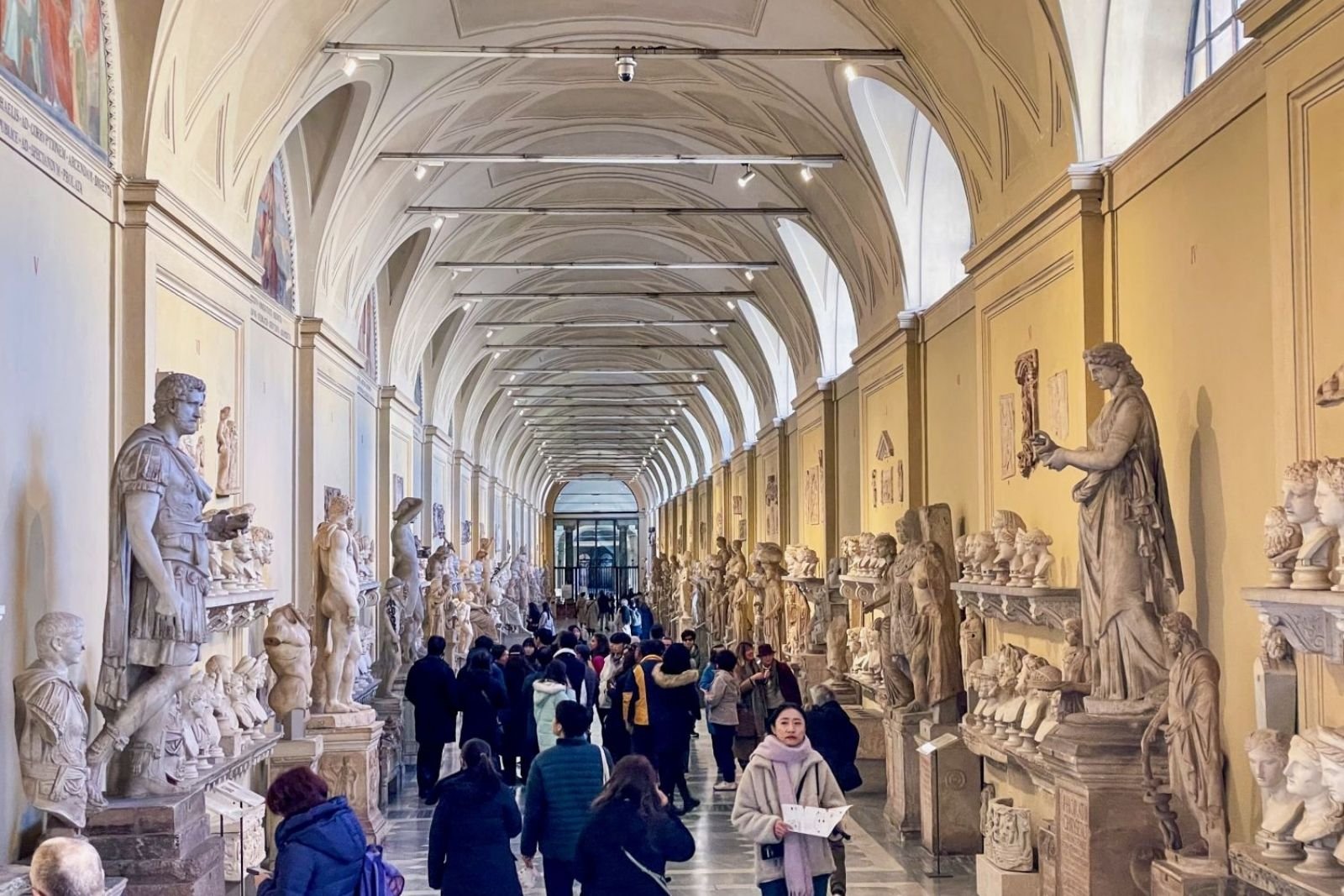
Italy rewards travelers who step inside its museums as much as those who wander its piazzas.
Visitors are often astonished by the beauty of Italian squares, with their fountains, façades, and café culture. Yet it is within the country’s museums that the deeper layers of local identity truly unfold.
Across Italy, collections span millennia, from ancient civilizations to Renaissance masterpieces and modern innovation. There is far more to see than most anticipate, which is why a meaningful cultural experience demands both time and intention.
Only by slowing down can the richness of each gallery and corridor be fully appreciated.
1. National Archaeological Museum of Naples – Naples
The National Archaeological Museum of Naples is one of the most important classical antiquities museums in the world. Its vast collection includes extraordinary treasures from Pompeii and Herculaneum, offering vivid insight into ancient Roman daily life.
Frescoes, mosaics, and sculptures excavated under Charles of Bourbon in the eighteenth century and later expanded during Joachim Murat’s rule in the nineteenth century remain astonishingly intact. Visiting the National Archaeological Museum of Naples before exploring the archaeological sites near Mount Vesuvius, like Pompeii and Herculaneum, offers far greater historical perspective.
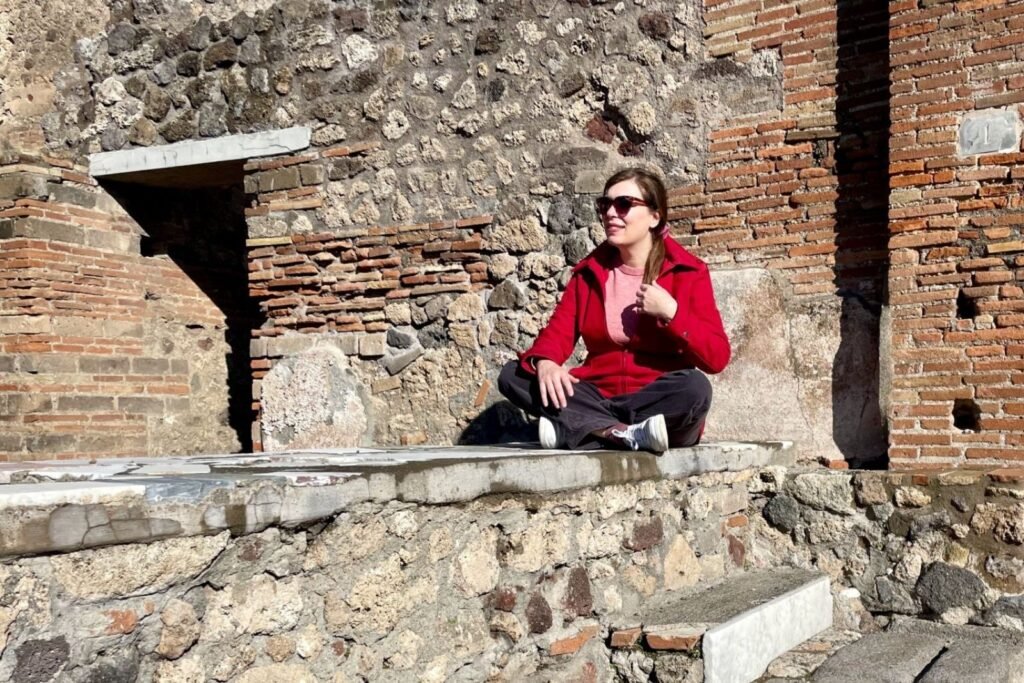
The museum building is immense and requires strategic planning. An entire day is advisable, especially as some sections operate on alternating schedules. Checking opening times in advance makes a significant difference.
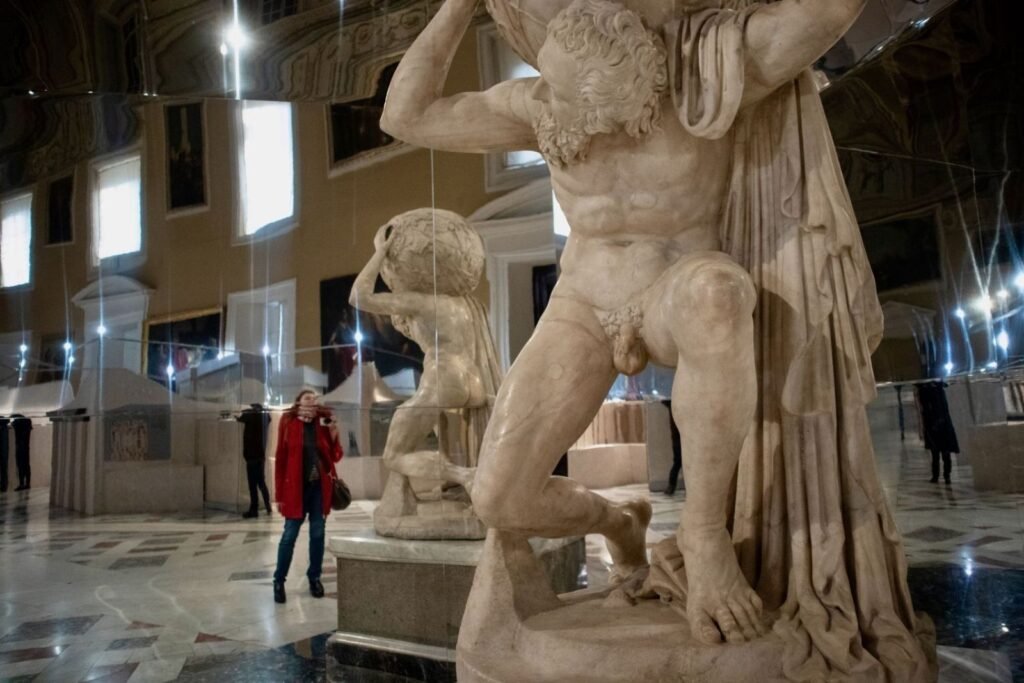
While the Pompeian collection remains the most celebrated highlight, the Farnese Collection is equally compelling. Monumental sculptures dominate the galleries with dramatic presence. The Farnese Atlas, displayed beneath the great sundial in the Hall of the Meridian, leaves visitors genuinely speechless.
Beyond its classical core, the museum also includes a refined Egyptian section and an ambitious program of temporary exhibitions. Altogether, it offers a more layered and intellectual perspective on Naples beyond pizza and folklore.
2. Vatican Museums – Vatican City
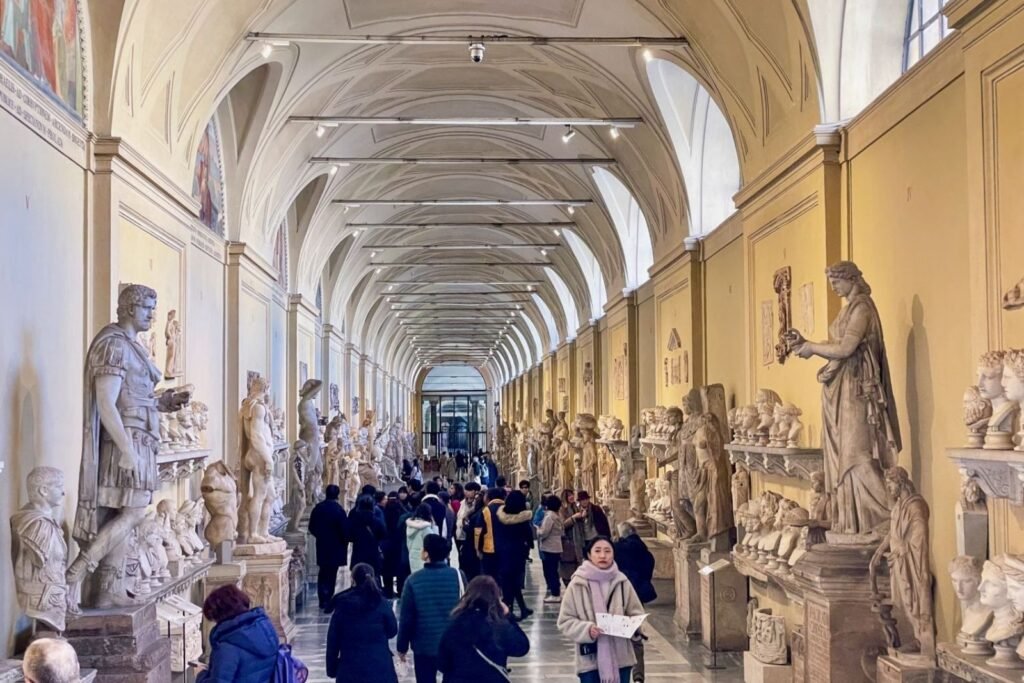
The Vatican Museums form an immense and iconic museum complex, of which the Sistine Chapel represents only a small part. Walking through the galleries means moving across centuries of artistic ambition and papal patronage.
The scale alone reveals how systematically art was used to construct authority and prestige. One of the most compelling aspects of the visit is recognizing that much of the collection functioned as visual propaganda. These artworks were assembled to demonstrate the temporal power of the Church as much as its spiritual authority.
This intention becomes particularly evident in the Gallery of Maps. Its frescoed walls depict the Italian peninsula and papal territories at the time of Pope Gregory XIII in 1580.
Beyond Renaissance masterpieces, the Vatican also embraces modern expression. Works such as Arnaldo Pomodoro’s Sphere in the Vatican Gardens introduce a striking contemporary contrast.
The collections are so vast that it is easy to lose orientation and context. In peak hours, the most popular rooms such as the Raphael Rooms or the Sistine Chapel become intensely congested. For art enthusiasts, however, it remains an essential encounter with power articulated through artistic brilliance.
3. National Museum of Science and Technology “Leonardo da Vinci” – Milan
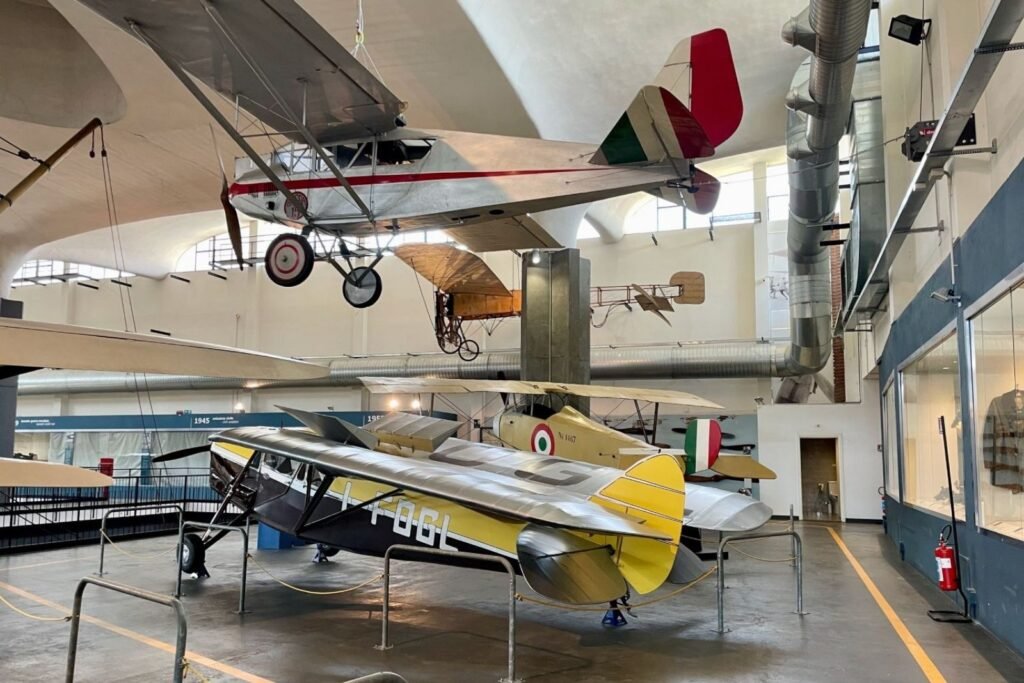
Milan’s National Museum of Science and Technology Leonardo da Vinci offers a different perspective on the city, beyond the Duomo, the Pinacoteca di Brera, and other art-focused landmarks. Dedicated to Leonardo’s genius, it combines historical artifacts with immersive, hands-on displays.
The museum is especially known for its full-scale reconstructions of da Vinci’s machines, transforming abstract sketches into tangible structures. These models make his visionary thinking accessible in a direct and engaging way.
Entire pavilions are devoted to trains, aircraft, and helicopters, guiding visitors through the evolution of transport and engineering. You can also marvel at the space area, which displays the only moon fragment visible in Italy.
Outside and within the museum grounds, highlights include the Luna Rossa AC72 catamaran, the brigantine schooner Ebe, the Conte Biancamano transatlantic liner, and the Enrico Toti submarine, which visitors can explore from the inside.
Numerous laboratories and workshops encourage children to participate actively rather than observe passively. Unlike many Italian museums, interaction is not only allowed but encouraged. The museum is vast and easily fills an entire day, offering a broader understanding of Milan as a city shaped by science, technology, and industrial ambition.
4. Uffizi Gallery – Florence
The Uffizi Gallery is synonymous with the Italian Renaissance. Its halls guide visitors through masterpieces by Botticelli, Michelangelo, and Leonardo da Vinci, tracing the evolution of Western painting from the thirteenth to the twentieth century. Seeing works such as “The Birth of Venus” in person is an unforgettable experience, not only for their beauty but for their historical weight. Within these rooms, the artistic ambition of Florence becomes unmistakable.
The collection extends beyond painting. Sculpture plays a significant role, with works spanning from antiquity to the modern era. The architecture itself deserves attention, designed to modulate space with rhythm and perspective while maintaining a commanding presence along the Arno. The building frames art in a way that enhances both grandeur and intimacy.
The Uffizi Galleries are also part of a broader cultural complex. The ensemble includes Palazzo Pitti, the Boboli Gardens, and the Vasari Corridor, which once allowed the Medici family to move discreetly between residences. Together, these spaces reveal how art, power, and urban design intertwined in Florence. Visiting the Uffizi means entering a system of patronage that shaped the trajectory of European art for centuries.
5. Egyptian Museum – Turin
Turin’s Egyptian Museum holds one of the most significant collections of Egyptian antiquities outside Cairo. Its origins are closely linked to the nineteenth-century archaeologist-adventurers who explored Egypt at a time when Egyptian artefacts were highly fashionable in Europe.
King Charles Felix of Savoy acquired an important collection and chose to display it publicly, laying the foundations of the first Egyptian museum in the world. From the outset, scholarship and royal patronage shaped its identity.
The museum’s chronological layout allows visitors to understand ancient Egypt as a civilisation that evolved over millennia. Contrary to popular belief, it was not a monolithic culture and you can learn how Amenhotep IV introduced a radical attempt at monotheism and transformed visual art.
The tomb of Kha and Merit, an architect and his wife, unearthed in 1906, was sensational because grave robbers had never plundered it. The most scenographic section of the museum is the Statuary Gallery, where visitors walk among imposing statues of the warrior goddess Sekhmet, arranged in a dramatic setting as an unforgettable conclusion to the visit.

Practical Advice for Visiting Museums in Italy
Italy is exceptionally rich in history and culture, and its museums reflect that depth. Stepping inside these institutions invites a slower rhythm of travel, one that moves beyond postcard views and into layered narratives. Across the peninsula, collections span centuries and disciplines, from archaeology to painting and scientific innovation.
Designing an itinerary that balances outdoor exploration with time indoors allows for a more complete understanding of the country. Approaching museums with context makes a noticeable difference. Visiting with a knowledgeable guide can help situate artworks within their historical and artistic frameworks, revealing connections that might otherwise remain invisible.
At the same time, it is important to remember that many Italian museums prioritise preservation. Touching objects is rarely permitted, and dedicated children’s areas are not always available. Large institutions such as the Vatican Museums can also present accessibility challenges, although efforts toward inclusion have increased in recent years.
Advance planning is crucial. Popular museums often become extremely crowded, particularly during weekends and peak travel seasons. Reserving tickets online is strongly advisable, especially for highly visited sites such as the Uffizi Gallery and the Vatican Museums. Securing entry in advance not only avoids long queues but also allows the visit to unfold at a more measured and rewarding pace.



Paola Bertoni is a European travel writer, single mom, and aviation enthusiast who writes in both English and Italian. She focuses on cities, museums, and heritage sites, uncovering the historical layers that shape each destination. Through her blogs, she shares experience-led stories that bring cultural depth and context to every place she explores. You can connect with the Paola on her blog Paola Everywhere.