
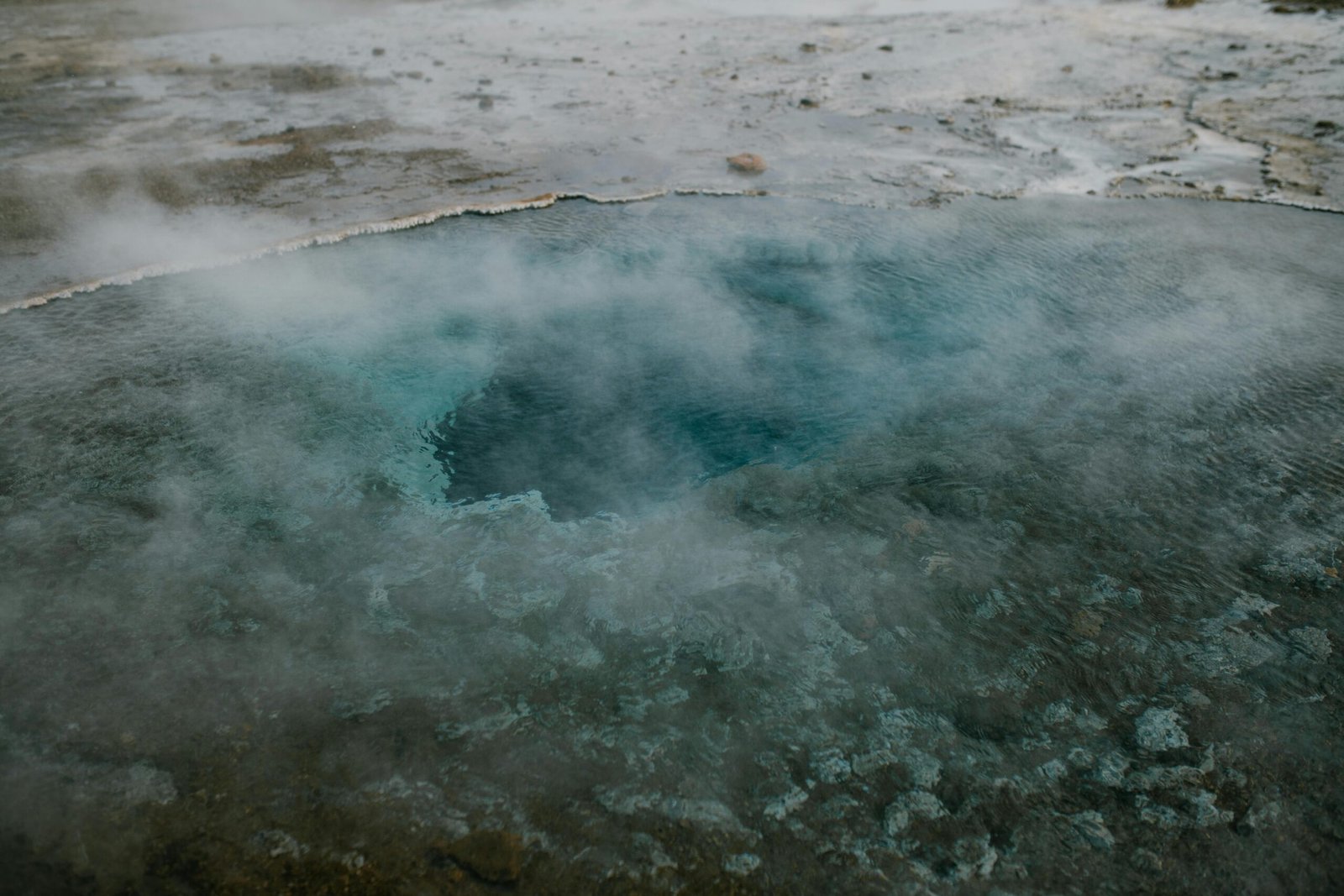
Iceland is trending right now thanks to a recent public mix-up that sent people rushing to search engines for a geography refresher.
The confusion isn’t new — these two destinations have been mistaken for each other for centuries — but the renewed attention has travelers asking a fair question:
How different can they really be?
The short answer: very.
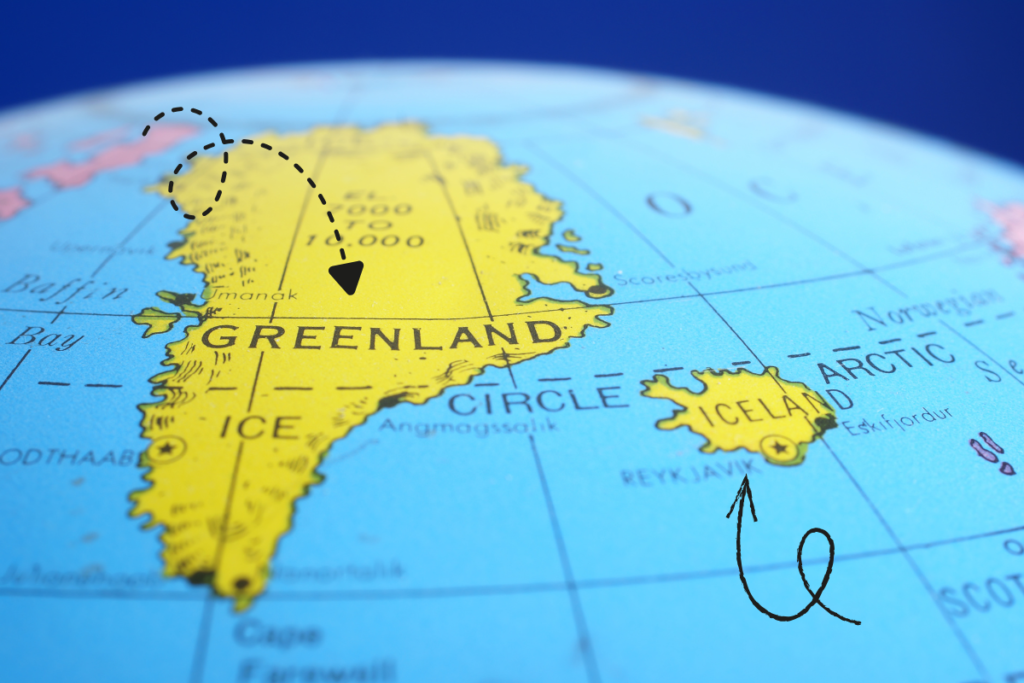
While Iceland and Greenland sit relatively close on the map, they offer entirely different travel experiences. One is a road-trip-friendly island known for waterfalls, geothermal hot springs, and lively towns. The other is a vast Arctic landscape where travel is shaped by air and sea, and the experience feels more like an intentional expedition than a traditional vacation.
If Iceland popping up in your feed sparked a travel itch, you’re not alone. But before booking a flight — or confusing the two — it’s worth understanding what actually sets these destinations apart.
1. Iceland Is Green (Sometimes). Greenland Is, in Fact, Icy.
The irony is legendary.
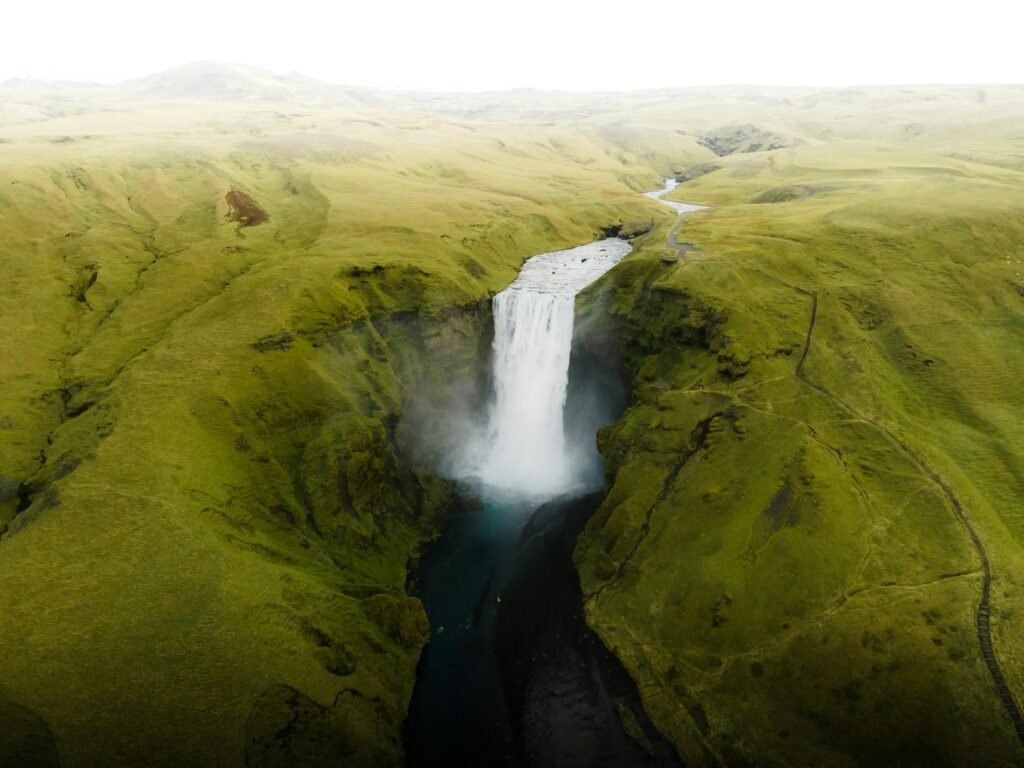
Iceland earned its name centuries ago, but much of the island is surprisingly green in summer, with moss-covered lava fields, grassy valleys, and farmland surrounding its towns.
Yes, there are glaciers — massive ones — but they share the landscape with waterfalls, black-sand beaches, and volcanic terrain.
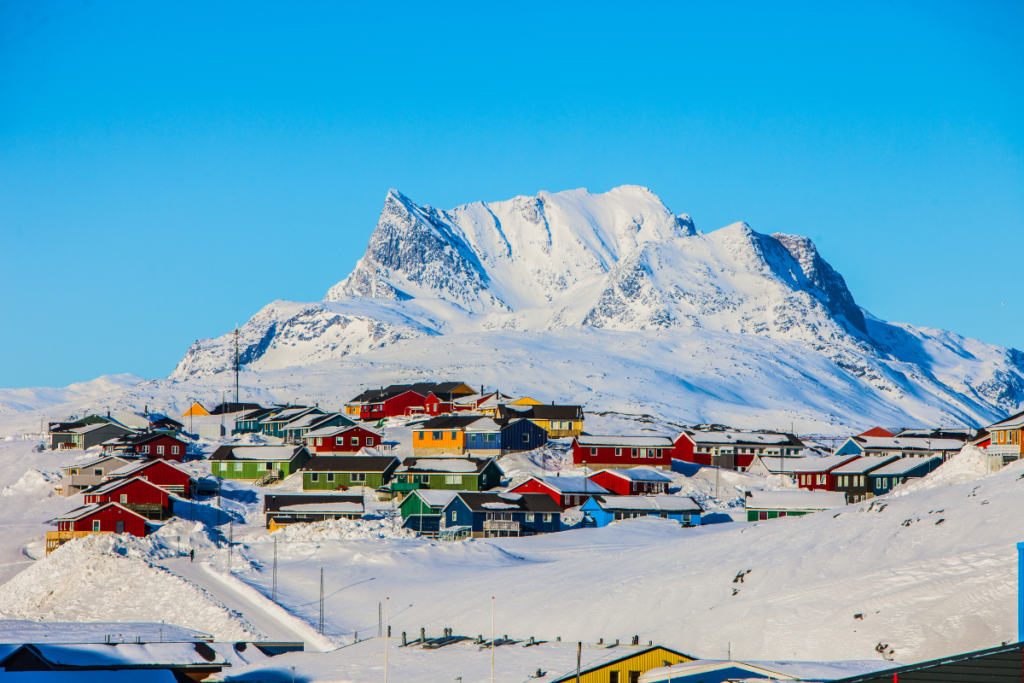
Greenland, on the other hand, is dominated by ice. Roughly 80% of Greenland is covered by an ice sheet, and even in summer snow and glaciers define much of the scenery.
Coastal areas thaw just enough for small settlements and tundra, but this is unmistakably Arctic nature.
Traveler takeaway:
If you picture hiking trails, varied landscapes, and warm natural pools, Iceland matches those expectations. If you’re drawn to colossal icebergs, fjords, and polar scenery, Greenland delivers an unforgettable Arctic experience.
2. How People Live — and How Travelers Explore — Each Place
Population distribution shapes travel options.

Iceland is home to about 390,000 people, with a strong population center in Reykjavík and a network of towns connected by highways. Most visitors rent a car to explore — the famous Ring Road circles the island and gives access to waterfalls, geysers, volcanic plateaus, and highland trails.
Greenland, by contrast, has roughly 56,000 residents living mainly in coastal towns and settlements. There’s no road network between towns, so travel between regions happens by air or sea — often by domestic flights, ferries, or cruise routes — and adventures focus on a specific region at a time. Greenland is also known for immersive cultural experiences including Inuit communities, wildlife viewing, kayaking fjords, and summer midnight sun exploration.

English is widely spoken across Iceland, making travel straightforward for international visitors. In Greenland, English is commonly spoken in tourism and hospitality settings, but local languages are Greenlandic and Danish, reflecting the region’s distinct cultural identity.
Iceland welcomes more than two million visitors per year, while Greenland receives far fewer — typically tens of thousands — contributing to its quieter atmosphere and sense of pristine wilderness.
Traveler takeaway:
Iceland supports flexible, self-guided exploration across diverse landscapes. Greenland rewards intentional planning and regional adventure — a structured but deeply rewarding Arctic journey.
3. How to Get There — and How to Move Around
Iceland is one of the most accessible adventure destinations in northern Europe. Flights from North America and Europe to Reykjavík’s main airport are frequent and often affordable, and once there, travelers commonly rent cars and drive the ring road or focus on day loops like the Golden Circle. Roads are well-maintained, and even solo travelers handle navigation and logistics with confidence.
Greenland requires a bit more planning. Many international visitors connect through Iceland or Denmark, then fly or take sea transport to their chosen region. Once in Greenland, travel between towns isn’t done by car; instead, plane, ferry, or scheduled boat tours are the norm. This structure doesn’t make Greenland inaccessible — it’s simply different: travel feels deliberate, with transport shaped by geography rather than road networks.
It’s also worth noting that Greenland is expanding international access. In October 2024, Nuuk officially opened its new international airport following a runway extension, making it Greenland’s first civilian airport capable of handling transatlantic flights. The change is expected to allow more direct connections and could gradually make travel to Greenland more flexible in the years ahead.
Traveler takeaway:
Iceland offers straightforward access and flexible road-based travel. Greenland requires coordination of air and sea segments, rewarding travelers with intentional, region-centered exploration (for now at least).
4. Road Trip vs. Arctic Expedition
This may be the most noticeable difference once you’re on the ground.
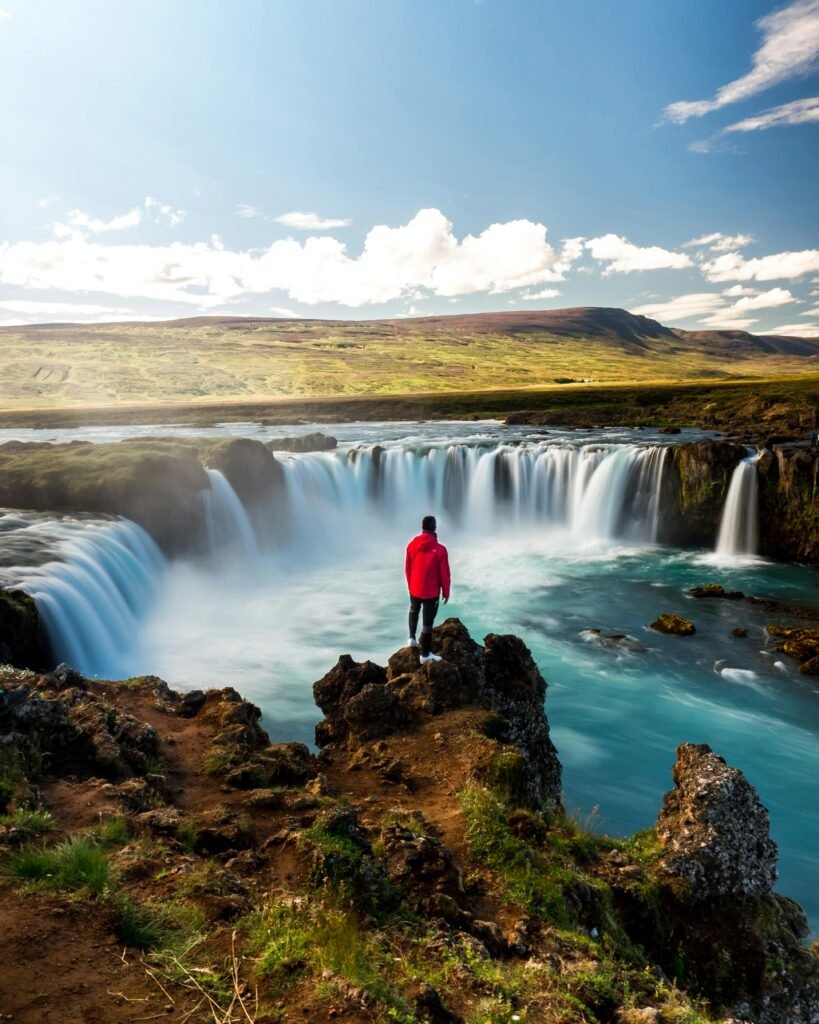
Iceland is one of the world’s supreme road-trip destinations. Travelers chase waterfalls like Seljalandsfoss and Skógafoss; soak in geothermal waters; trek great multi-day trails such as Laugavegur; and manuever scenic coastal stretches with ease.
Greenland is less about continuous driving and more about exploration within wild terrain.
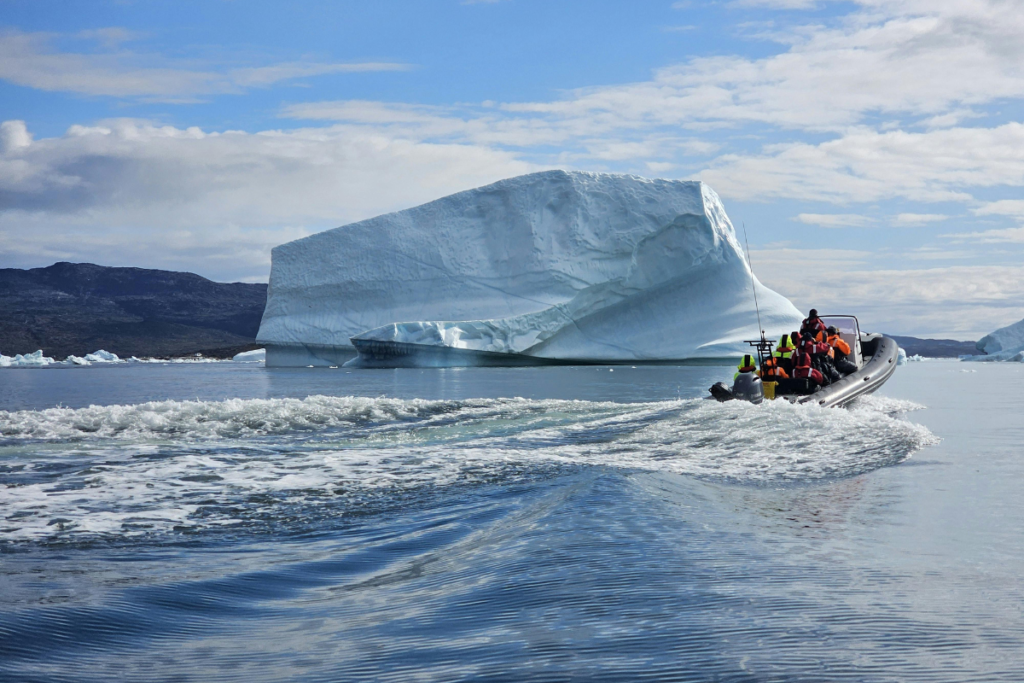
Trips often revolve around specific activities like iceberg cruising, fjord paddling, whale watching, or regional hiking. The focus is on immersion in one area’s Arctic ecosystems rather than covering great distances.
Greenland’s protected areas support abundant wildlife, including whales and other Arctic species, while Iceland’s wildlife experiences are more concentrated along the coast, with marine life and large bird colonies playing a central role.
In addition to land-based exploration, Greenland is increasingly featured on expedition and ice-fjord cruise itineraries, offering travelers access to remote coastlines, glaciers, and wildlife that are difficult to reach independently.
Traveler takeaway:
Choose Iceland for freedom, variety, and classic road touring. Choose Greenland for localized, deep-nature adventure with sea and ice at the center.
5. Timing Matters
Seasonality shapes travel in both countries, but in different ways.
Iceland’s peak season is late spring through early fall, when long daylight hours and open roads make travel easier. Off-season (winter) also has its charm — northern lights, ice caves, and quiet landscapes — but requires more flexibility.
Greenland’s travel calendar is defined by what you want to see. Summer (June–August) brings milder weather, sailing among icebergs, fjord kayaking, and the midnight sun. While Greenland’s Arctic conditions are generally colder than Iceland’s overall, summer temperatures — especially in the south — can be comparable to Iceland, often ranging from 10–15 °C (50–59 °F), before dropping more sharply outside those regions and seasons.
Traveler takeaway:
Both destinations are shaped by their seasons. Iceland adapts to travelers year-round; Greenland’s experiences vary more dramatically with the weather and daylight.
So Why Do People Keep Mixing Them Up?
The names don’t help. Neither does the fact that both are island destinations associated with cold climates and dramatic scenery.
Both are ultimate adventure destinations — but they may cater to a slightly different traveler.


